By Omar AlSaadi, Articling Student, Lewis & Associates LLP
On November 5, 2026, Immigration, Refugees and Citizenship Canada (IRCC) released the 2027–2029 Immigration Levels Plan. The plan sets how many new permanent residents and temporary residents Canada intends to welcome each year, and which programs will get the most spaces. For anyone planning immigration to Canada, it is one of the most useful documents the government publishes.
This guide explains the new targets in plain language, what changed from last year’s plan, the new time-limited measure for people already in Canada, and what the numbers mean for workers, families, students and refugees.
Released November 5, 2026
2027–2029 Levels Plan at a Glance
Permanent resident targets for each year of the plan.
- 49,300 refugees and protected persons
- 5,000 humanitarian and other admissions
- Rising French-speaking targets outside Quebec
- 370,000 new arrivals per year
- 220,000 workers and 150,000 students
- Goal: temporary population under 5%
What Is the Immigration Levels Plan?
Each year, the federal government must table a plan setting out how many permanent residents Canada aims to admit over the next three years. Since 2024, the plan also includes targets for new temporary residents, such as workers and international students. The first year of the plan is firm; IRCC says the notional targets for the second and third years “will be confirmed or adjusted” in later plans.
Each target has a low and high range. For 2027, the overall permanent resident range is 352,500 to 422,000, with 380,000 as the target. IRCC uses these numbers to plan processing, so a program with a larger target generally means more invitations and faster decisions in that category.
Permanent Resident Targets, 2027–2029
The overall target stays at 380,000 permanent residents per year for all three years. Here is how it breaks down:
| Category | 2027 target | Range (2027) |
|---|---|---|
| Federal High Skilled (Express Entry) | 100,000 | 87,000–123,000 |
| Provincial Nominee Program | 95,000 | 83,000–106,000 |
| Atlantic Immigration Program | 6,000 | 5,000–8,500 |
| Rural Community Immigration Program | 5,500 | 4,000–6,500 |
| Federal economic pilots | 7,900 | 5,000–15,450 |
| Federal business (Start-up Visa, self-employed) | 1,500 | 500–5,000 |
| Total economic (incl. Quebec) | 244,700 | 230,000–270,000 |
| Spouses, partners and children | 66,000 | 61,000–75,000 |
| Parents and grandparents | 15,000 | 12,000–18,000 |
| Total family | 81,000 | 76,000–89,000 |
| Protected persons in Canada and dependants abroad | 20,000 | 16,000–29,000 |
| Government-assisted refugees | 11,750 | 10,000–16,000 |
| Privately sponsored refugees | 17,550 | 14,500–20,500 |
| Total refugees and protected persons | 49,300 | 42,000–55,000 |
| Humanitarian and other | 5,000 | 4,500–8,000 |
| Overall | 380,000 | 352,500–422,000 |
What Changed From the 2026–2028 Plan?
The overall number did not change: the 2026–2028 plan also targeted 380,000 permanent residents. What changed is how the spaces are shared:
| Category | 2026 target (previous plan) | 2027 target (new plan) |
|---|---|---|
| Total economic | 239,800 | 244,700 |
| Express Entry (Federal High Skilled) | 109,000 | 100,000 |
| Provincial Nominee Program | 91,500 | 95,000 |
| Atlantic Immigration Program | 4,000 | 6,000 |
| Spouses, partners and children | 69,000 | 66,000 |
| Parents and grandparents | 15,000 | 15,000 |
| Refugees and protected persons | 49,300 | 49,300 |
| Humanitarian and other | 6,900 | 5,000 |
Key takeaways:
- More economic immigration, shifted toward the provinces. Economic admissions rise to 64.4% of the total. Provincial programs gain spaces while the Express Entry target is lower than in 2026.
- Express Entry is more selective. Fewer spaces combined with the new CRS points for high-wage work that took effect on November 3, 2026 means candidates need a strong profile.
- Slightly fewer spousal admissions. The spouses, partners and children target drops from 69,000 to 66,000. Spousal sponsorship remains a priority category, but complete applications matter more than ever.
- A new rural program. The plan includes a dedicated line for the Rural Community Immigration Program, with targets rising from 5,500 in 2027 to 6,500 in 2029.
The New Time-Limited Measure for People Already in Canada
The most talked-about part of the plan is a new time-limited measure. According to IRCC, it will “provide additional space to process permanent residence applications in 2027” in two groups:
- A workers cohort that will move in-Canada workers and their accompanying family members to permanent residence, in collaboration with provinces and territories, to support regional labour market needs.
- A humanitarian cohort for people who are already in Canada and have been waiting for many years.
This space is in addition to the regular targets above. Various figures for its size have circulated online, but as of November 2026 IRCC’s official plan does not give a number for the measure, a split between the two groups, eligibility criteria or an application process. Be cautious with anyone who claims to know the details or offers to “reserve a spot.”
The plan also confirms that IRCC will continue two one-time initiatives announced in Budget 2025: up to 115,000 protected persons in Canada and their in-Canada dependants, and up to 33,000 work permit holders, will be moved to permanent residence in 2026 and 2027. We explain the worker initiative in our guide to the 33,000 temporary worker PR initiative.
2027 time-limited measure
What We Know and What We Do Not
Based only on IRCC’s official plan.
- Extra PR processing space in 2027
- A workers cohort, with provinces and territories
- A humanitarian cohort for long-waiting people in Canada
- Separate from the regular 380,000 target
- The official number of spaces
- Who qualifies in each cohort
- Whether there is a separate application
- Start dates and deadlines
Temporary Residents: Fewer New Arrivals
The plan sets 370,000 new temporary resident arrivals per year: 220,000 workers (170,000 under the International Mobility Program and 50,000 under the Temporary Foreign Worker Program) and 150,000 students. IRCC expects workers to make up about 60% of new arrivals. The government has also repeated its commitment to reduce the temporary population to less than 5% of Canada’s total population by the end of 2027.
If you are already in Canada on a permit, these targets mostly affect new arrivals, not extensions. Still, a tighter system means mistakes are costly. Apply to extend before your permit expires, and read our guide to maintained status and restoration if your permit is close to expiring.
French-Speaking Immigration Outside Quebec
The plan raises the targets for French-speaking permanent residents outside Quebec from 9.5% in 2027 (31,825 people) to 10.5% in 2028 and 12% in 2029. French-language ability continues to be an advantage in Express Entry category draws and in several pilots.
What the Plan Means for You
Practical impact
What the Plan Means for You
Six common situations and the step to take now.
- 1Express Entry candidates: improve language scores and check the new high-wage points.
- 2Workers in Ontario and other provinces: look closely at provincial nominee streams.
- 3Couples: file complete, well-documented spousal applications.
- 4Students: plan your route from study to work to PR early.
- 5Long-waiting people in Canada: watch for official details of the humanitarian cohort.
- 6Refugee claimants: know the new eligibility rules and deadlines.
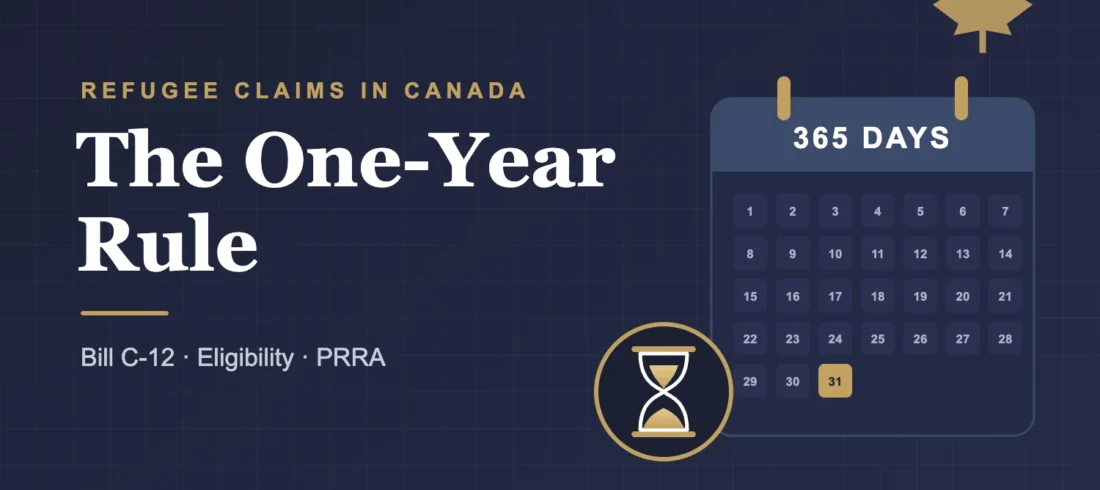
For refugee claimants, the levels plan does not change the eligibility rules that came with Bill C-12. If you entered Canada more than a year ago and are thinking about a claim, read our guide to the one-year rule for refugee claims. For a full overview of all routes, see our guide on how to immigrate to Canada.
Beware of Scams
Announcements about new measures attract fraud. No one can guarantee you a place in the 2027 time-limited measure before IRCC publishes the rules. Government fees are paid only to IRCC, and IRCC publishes guidance on fraud and scams. Only lawyers, Quebec notaries and licensed consultants can charge for immigration advice; you can check whether someone is an authorized representative.
How a Lawyer Can Help
The levels plan tells you where Canada is heading, but your options depend on your own history, status and family. A Canada immigration lawyer can review your profile against the programs with the most space, keep your status secure while new measures are rolled out, and prepare an application that holds up to closer scrutiny.
Lewis & Associates LLP helps individuals and families in Toronto and across Canada with permanent residence, work permits, sponsorship and refugee matters. Book a consultation or contact our office to discuss your plans.
Frequently Asked Questions
How many immigrants will Canada accept in 2027?
The 2027–2029 Immigration Levels Plan sets a target of 380,000 new permanent residents in 2027, within a range of 352,500 to 422,000. The same target applies to 2028 and 2029.
When was the 2027–2029 Immigration Levels Plan released?
IRCC published the supplementary information for the plan on November 5, 2026.
How many Express Entry admissions are planned for 2027?
The Federal High Skilled target, which covers Express Entry programs, is 100,000 in 2027, within a range of 87,000 to 123,000. This is lower than the 109,000 target set for 2026.
Is the Provincial Nominee Program target increasing?
Yes. The PNP target is 95,000 for each year from 2027 to 2029, compared with 91,500 for 2026 in the previous plan.
What is the new time-limited measure in the plan?
IRCC is adding extra space to process permanent residence applications in 2027 for two groups: a workers cohort, delivered with provinces and territories, and a humanitarian cohort for people already in Canada who have been waiting for many years.
How many people will the 2027 time-limited measure cover?
As of November 2026, IRCC’s official plan does not state a number for the measure, how spaces are split between the two groups or who qualifies. Watch for official IRCC announcements.
How many spouses and partners will be admitted in 2027?
The target for spouses, partners and children is 66,000 in 2027, down from 69,000 for 2026 in the previous plan.
How many temporary residents will Canada admit?
The plan targets 370,000 new temporary resident arrivals per year: 220,000 workers and 150,000 students. Extensions and in-Canada permit applications are not counted in these targets.
Does the levels plan change the refugee claim rules?
No. The plan sets admission targets, including 49,300 refugees and protected persons per year. Eligibility rules for refugee claims, such as the one-year rule under Bill C-12, are set by law.
Can the targets for 2028 and 2029 change?
Yes. IRCC says the targets for the second and third years are notional and will be confirmed or adjusted in future plans.
This article provides general information as of November 2026 and is not legal advice. Immigration targets and programs can change. Every case depends on its own facts. Speak with a lawyer before applying.